
Swimming with Humpback Whales in Tonga – What to Expect, When to Go and Why It's Extraordinary

There are few experiences in the ocean quite like being in the water with a humpback whale. The sheer size of these animals is difficult to comprehend until you see one beneath the surface. A slow movement of a pectoral fin, the extraordinary length of a body disappearing into the blue, or the unexpected sight of a curious calf can leave an impression that lasts a lifetime.
Every year, humpback whales migrate from their Antarctic feeding grounds to the warmer waters of Tonga, where they mate, give birth and nurse their young. For a few months, this small South Pacific island nation becomes one of the world's remarkable destinations for swimming with humpback whales in their natural environment.
Unlike whale watching from a boat, swimming with whales in Tonga offers the possibility of observing these enormous marine mammals underwater, on their terms.

When Is the Best Time to Swim with Humpback Whales in Tonga?
Tonga's humpback whale season generally runs from July through October, although the timing of sightings and encounters varies from year to year.
August and September are particularly popular months for whale swimming, when mothers and calves are often present in Tongan waters.
The whales travel thousands of kilometres from Antarctica to reach these warm tropical breeding grounds. During their time in Tonga, they rely largely on energy reserves accumulated in the Southern Ocean.
For visitors, the season offers opportunities to encounter mothers with calves, adult whales and occasionally groups of males competing for the attention of a female.
No two days on the water are ever the same. Whale movements, sea conditions and the animals' willingness to tolerate swimmers all influence what happens.
What Is It Really Like to Swim with Whales in Tonga?
The experience begins long before entering the water.
From the boat, a distant blow may be the first indication that whales are nearby. Sometimes a breach reveals their position. At other times, a dark shape moving beneath the surface is the only sign.
Experienced local guides assess the whales' behaviour before deciding whether a swimming encounter is appropriate.
When conditions allow, a small group of swimmers enters the water quietly, accompanied by a licensed guide.
And then there is the extraordinary moment when a whale appears underwater.
Humpbacks can reach approximately 15 metres or more in length, yet their movements can seem remarkably controlled and gentle. Their enormous pectoral fins, distinctive markings and the scale of their bodies are fascinating to observe.
Sometimes a whale passes at a distance. Occasionally one remains nearby, seemingly unhurried by the presence of swimmers.
A mother and calf encounter can be especially memorable. Young calves must surface regularly to breathe, while their mothers may rest or move slowly through the water.
But these are wild animals, and encounters cannot be predicted or guaranteed. The most rewarding experiences are those in which the whales are free to determine the interaction.

Where Is the Best Place to Swim with Whales in Tonga?
Vava'u – Tonga's Established Whale Swimming Destination
The Vava'u island group in northern Tonga is one of the country's best-known whale swimming destinations.
Its sheltered bays, surrounding islands and access to deeper ocean waters provide a varied setting for encounters with migrating humpback whales.
Vava'u has an established community of licensed whale swimming operators, accommodation providers and experienced local guides.
The islands themselves are beautiful, with limestone coastlines, secluded anchorages and intensely blue water.
Ha'apai – A Quieter Island Experience
Further south, the Ha'apai island group offers a different atmosphere.
These islands are less developed for tourism, with long beaches, coral reefs and a particularly remote South Pacific character.
Whale swimming is also available here during the season, subject to licensed operator availability and local conditions.
Choosing between Vava'u and Ha'apai often comes down to the kind of holiday you prefer, the accommodation available and the style of whale swimming experience you are looking for.
How Many Days Should You Allow for Whale Swimming?
I would always recommend allowing several days on the water rather than planning around a single or double excursion. Tonga is not an easy destination to get to so maximising you time in the water with these majestic creatures is obviously recommended.
Whale swimming is governed by nature. Weather can interrupt boat departures, whales may be travelling rather than resting, and not every sighting results in an opportunity to enter the water.
A multi-day whale swimming holiday provides more opportunities to experience different encounters and removes some of the pressure of expecting everything to happen in one day.
It also gives visitors time to enjoy Tonga itself, rather than treating the islands simply as a departure point for whale excursions.
Is Swimming with Humpback Whales in Tonga Safe?
Whale swimming in Tonga is a regulated activity, and visitors should choose licensed operators who follow local whale interaction rules.
Guides assess whale behaviour, sea conditions and the suitability of each encounter.
Swimmers should be comfortable using a mask, snorkel and fins in open water. Strong swimming ability, an awareness of ocean conditions and following the guide's instructions are important.
Tonga whale swim operators can take between 4 - 8 guests ( private charters are available if you wish) but the maximum number of people in the water at any time is 4. When the group is larger than 4 a rotation swim system applies.

Combining Tonga Whale Swimming with Fiji Diving
For those travelling a considerable distance to the South Pacific, Tonga also combines beautifully with a diving holiday in Fiji.
The two experiences could hardly be more different.
Tonga is about the immense scale and presence of humpback whales in open blue water.
Fiji offers a contrasting underwater world of soft coral-covered reefs, sharks, intricate marine life and spectacular reef systems such as Rainbow Reef and the Great White Wall.
The Sharks of Beqa Lagoon – Fiji's Wild Side
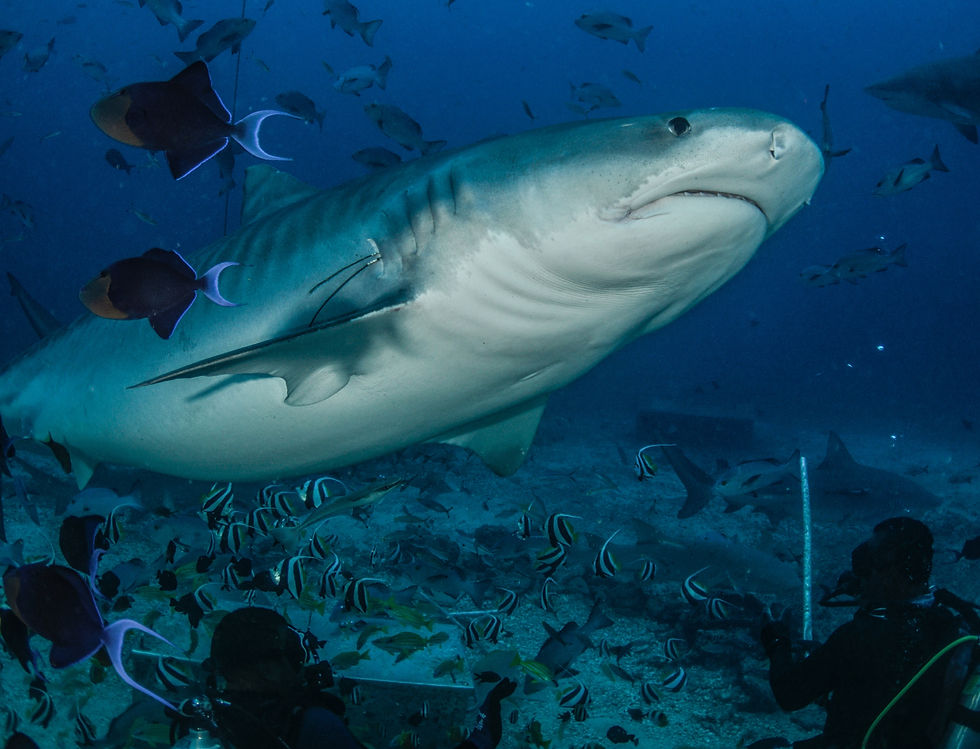
For those combining Tonga's humpback whales with diving in Fiji, the sharks of Beqa Lagoon offer an extraordinary contrast. In the waters off Pacific Harbour, bull sharks gather alongside reef sharks, with tiger sharks also making appearances. There is something unforgettable about watching these powerful animals move through the blue — the confidence of a bull shark, the unmistakable presence of a tiger shark, and the effortless grace of the smaller reef sharks. Beqa Lagoon is one of Fiji's most remarkable shark diving destinations, offering an entirely different encounter with the ocean's larger inhabitants.

Combining the destinations creates an opportunity to experience two very different aspects of the Pacific Ocean in one journey.
Waterlust Fiji specialises in arranging Fiji diving and Tonga whale swimming holidays, bringing together carefully selected accommodation and underwater experiences across both destinations.
A standalone seven-night Tonga whale swimming holiday is also available for those who prefer to concentrate entirely on the whales.
Frequently Asked Questions About Tonga Whale Swimming
What is the best month to swim with humpback whales in Tonga?
August and September are generally popular choices within the July–October whale season. Encounters depend on whale behaviour, weather and local conditions.
Do you need to be a scuba diver to swim with whales in Tonga?
No. Whale swimming is a snorkelling activity, not scuba diving. Participants should be comfortable swimming and snorkelling in open water.
Are whale encounters guaranteed?
No. Humpback whales are wild animals, and operators cannot guarantee an in-water encounter. Multiple days on the water improve the opportunity for encounters but cannot ensure them.
Can you swim with whale calves in Tonga?
Mothers and calves are present during the whale season, and encounters may occur when permitted under local regulations and when the whales' behaviour makes an interaction appropriate.
How long should a Tonga whale swimming holiday be?
A week is a practical starting point, allowing several days for whale swimming as well as time to enjoy the islands. Longer holidays can also incorporate Fiji diving.
Is Tonga worth visiting just for whale swimming?
For many ocean enthusiasts, absolutely. The possibility of observing humpback whales underwater in their natural breeding grounds is an exceptional wildlife experience, even without adding another destination.
Click Me

Two Oceans, Two Extraordinary Experiences
There is something deeply moving about sharing the water with the ocean's larger inhabitants. Whether it's the quiet presence of a humpback whale and her calf in Tonga, or the unmistakable silhouette of a bull shark approaching through the blue in Fiji's Beqa Lagoon, these encounters remind us just how extraordinary the underwater world can be.
Tonga's whales are reason enough to travel to the South Pacific. But for those who love the ocean, combining whale swimming with Fiji's colourful reefs and remarkable shark diving offers two very different experiences in one journey.
At Waterlust Fiji, we bring these destinations together in carefully planned holidays, allowing time to appreciate each experience without rushing from one to the next.


Comments